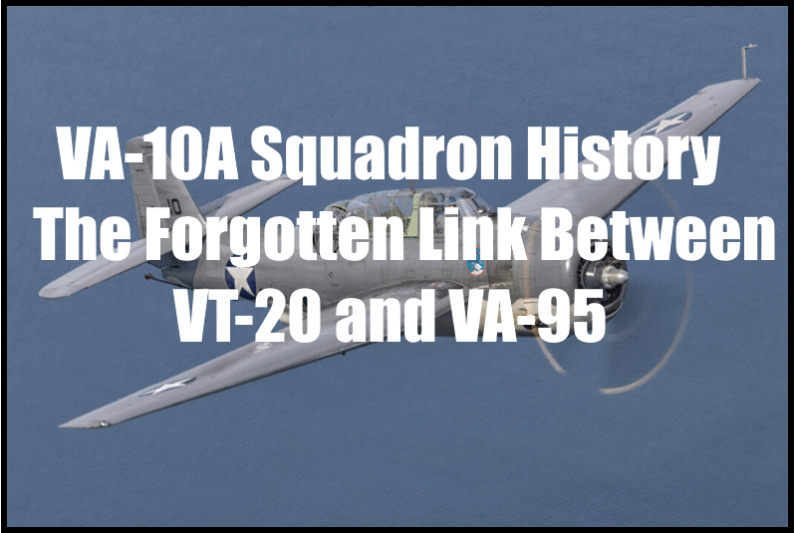
The VA-10A squadron history is easy to overlook because the designation existed for less than two years. Yet VA-10A represents an important bridge between the combat-tested Torpedo Squadron Twenty (VT-20) of World War II and the first U.S. Navy squadron to carry the designation VA-95.
VA-10A existed from November 15, 1946, until August 12, 1948. During that brief period, the squadron operated the Grumman TBM Avenger, served with Carrier Air Group 9, and deployed aboard USS Philippine Sea (CV-47).
The official lineage was:
VT-20 → VA-10A
The U.S. Naval History and Heritage Command confirms that VT-20 was established on October 15, 1943, redesignated VA-10A on November 15, 1946, and redesignated VA-95 on August 12, 1948. The first VA-95 was later disestablished on November 30, 1949.
For anyone interested in VA-95 history, VA-10A is therefore much more than a forgotten squadron designation. It is part of the direct lineage of the original VA-95.
VA-10A Squadron History: Why VT-20 Became VA-10A
World War II had demonstrated that carrier aircraft were becoming increasingly capable of performing several types of attack missions. The old divisions between torpedo bombers, dive bombers, and other specialized attack aircraft were beginning to disappear.
The Navy was changing. On November 15, 1946, the Navy implemented a major redesignation of its aviation squadrons. As part of that change:
Torpedo Squadron Twenty became Attack Squadron Ten A — VA-10A.
The Navy’s squadron designation history specifically records VT-20 as one of the torpedo squadrons redesignated into the new VA attack category. This did not create a new squadron. The sailors, history, and lineage of VT-20 continued under the new VA-10A designation.
VA-10A Squadron History: VA-10A and Carrier Air Group 9
Another organizational change occurred at almost exactly the same time. The former Carrier Air Group Twenty (CVG-20) was redesignated Carrier Air Group Nine (CVAG-9) on November 15, 1946. VA-10A became part of that air group.
The postwar CVAG-9 included several types of carrier aircraft, giving the air group fighter, bombing, and attack capabilities.
VA-10A’s primary aircraft remained the TBM-3E Avenger. The squadron’s aircraft carried the PS identification associated with USS Philippine Sea during its deployments.
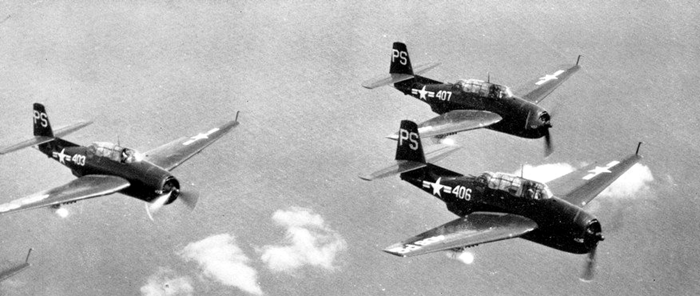
VA-10A aircraft were numbered in the 400 series, making them recognizable in photographs from the period.
VA-10A Squadron History: The TBM-3E Avenger
Although VA-10A was now called an attack squadron rather than a torpedo squadron, it continued flying the aircraft closely associated with its World War II history: The Grumman/Eastern Aircraft TBM Avenger.
The Avenger had been designed as a carrier-based torpedo bomber, but its size, range, rugged construction, and ability to carry different weapons made it useful for broader attack missions.
VA-10A operated the TBM-3E, one of the later versions of the Avenger. This aircraft represented the final development of a design that had fought throughout the Pacific War.
Thus, the aircraft most closely associated with VA-10A itself was the TBM-3E Avenger.
VA-10A Squadron History: USS Philippine Sea and VA-10A
The aircraft carrier most closely associated with VA-10A was USS Philippine Sea (CV-47).
Philippine Sea was an Essex-class aircraft carrier commissioned on May 11, 1946.
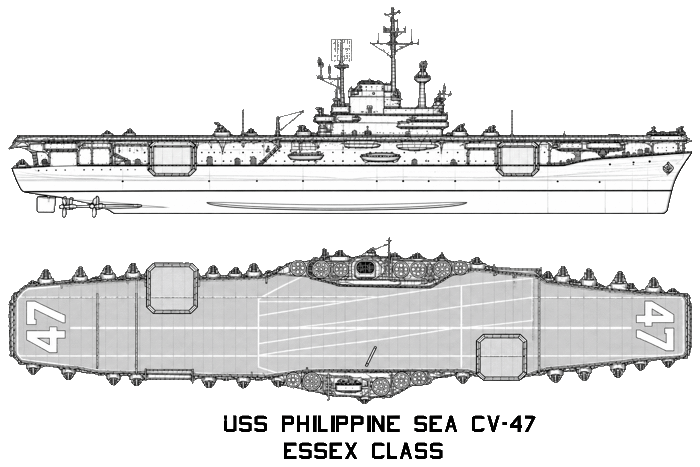
VT-20 had already operated aboard Philippine Sea during the carrier’s 1946 Caribbean shakedown period. The squadron became VA-10A on November 15 while this postwar transition was taking place.
VA-10A would subsequently make two documented cruises aboard Philippine Sea while carrying the VA-10A designation. These operations took the squadron first to the Caribbean and later across the Atlantic into the Mediterranean.
VA-10A Squadron History: VA-10A’s 1947 Caribbean Deployment
The first clearly documented deployment under the VA-10A designation took place aboard USS Philippine Sea from: March 27, 1947 – May 5, 1947
The carrier operated in the Caribbean with CVAG-9. The air group included:
- VF-9A — F8F-1 Bearcat and F6F-5P
- VF-10A — F8F-1 Bearcat
- VA-9A — SB2C-5 Helldiver
- VA-10A — TBM-3E Avenger
VA-10A’s aircraft carried the PS tail identification and 400-series numbers. This was a peacetime cruise, but peacetime carrier aviation was hardly easy duty.
The Navy was adapting to a dramatically different postwar environment while maintaining the skills necessary to operate a carrier air group at sea.
For VA-10A’s sailors and aircrew, that meant keeping aging Avengers ready for flight operations from an Essex-class carrier.
VA-10A Squadron History: VA-10A’s 1948 Mediterranean Deployment
VA-10A’s most significant deployment came the following year. On February 9, 1948, USS Philippine Sea departed with CVAG-9 for operations in the Atlantic and Mediterranean.
The carrier returned on June 26, 1948.
VA-10A again operated TBM-3E Avengers as the air group’s attack component.
The deployment came during the opening years of the Cold War.
World War II had ended less than three years earlier, but relations between the United States and Soviet Union were already deteriorating. American aircraft carriers increasingly became an important symbol of U.S. military presence overseas.
During Philippine Sea’s 1948 deployment, recorded ports of call included locations in Gibraltar, Algeria, Tunisia, Greece, Malta, France, Italy, Libya, and Crete.
For VA-10A sailors, it was a very different world from the combat cruises VT-20 had experienced only a few years earlier. Instead of launching strikes against the Japanese fleet, the squadron was now helping demonstrate American naval presence in the Mediterranean.
VA-10A Squadron History: VA-10A Deployment List
The documented carrier deployments during the VA-10A period were:
March 27 – May 5, 1947
Carrier: USS Philippine Sea (CV-47)
Air Group: CVAG-9
Aircraft: TBM-3E Avenger
Aircraft Identification: PS 400 series
Operating Area: Caribbean
February 9 – June 26, 1948
Carrier: USS Philippine Sea (CV-47)
Air Group: CVAG-9
Aircraft: TBM-3E Avenger
Aircraft Identification: PS 400 series
Operating Area: Atlantic/Mediterranean
There was also a shorter Caribbean operating period in January 1948 in which records show VA-10A embarked aboard Philippine Sea with CVAG-9, although sources distinguish this from the longer formal Mediterranean deployment beginning in February.
VVA-10A Squadron History: A-10A Commanding Officers
Because VA-10A was a continuation of VT-20 rather than a newly established squadron, its commanding-officer history is part of the same official lineage.
The Naval History and Heritage Command lists the following commanding officers for the overall VT-20/VA-10A/VA-95 lineage:
LCDR David E. Dressendorfer — assumed command October 15, 1943
LCDR Samuel L. Prickett — December 27, 1943
LCDR James N. Howell Jr. — April 16, 1945
LCDR J. J. Maechtlen — July 1947
LCDR Charles C. Ainsworth — February 7, 1949
When we narrow that list specifically to the period when the squadron was designated VA-10A — November 15, 1946 through August 12, 1948 — two officers are relevant.
LCDR James N. Howell Jr.
Command period overlapping VA-10A: November 15, 1946 – approximately July 1947.
Howell had assumed command while the squadron was still VT-20 on April 16, 1945. He therefore remained in command when VT-20 was redesignated VA-10A.
Under Howell, the squadron made the transition from a wartime torpedo squadron to a postwar attack squadron and participated in its early operations aboard USS Philippine Sea.
LCDR J. J. Maechtlen
Assumed command: July 1947.
Maechtlen commanded VA-10A through the remainder of its existence under that designation.
He therefore led the squadron during its important 1948 Mediterranean deployment aboard USS Philippine Sea and remained commanding officer when VA-10A became VA-95 in August 1948. The official Navy history gives only July 1947, rather than a specific day, for Maechtlen’s assumption of command.
August 1948: VA-10A Becomes VA-95
The VA-10A designation disappeared on August 12, 1948. But the squadron did not. VA-10A was redesignated: Attack Squadron Ninety-Five — VA-95.
The Naval History and Heritage Command identifies this squadron as the first U.S. Navy squadron to receive the VA-95 designation.
This distinction matters because later Navy squadrons also carried the VA-95 designation. Those later organizations were separate squadron lineages.
The original VA-95, however, came directly from VA-10A—and VA-10A came directly from the combat veterans of VT-20.
Why VA-10A Matters to VA-95 History
VA-10A existed for only about 21 months. It never fought a war under that designation.
It did not accumulate the combat fame that VT-20 earned in the Pacific or that later VA-95 squadrons would earn in Korea, Vietnam, and the Persian Gulf. But VA-10A deserves to be remembered.
- It carried the veterans and traditions of Torpedo Squadron Twenty into the postwar Navy.
- It operated the TBM-3E Avenger from USS Philippine Sea.
- It deployed to the Caribbean and Mediterranean.
- And on August 12, 1948, it became the first Attack Squadron 95.
For anyone tracing the genealogy of VA-95, VA-10A is therefore an essential piece of the story.
VT-20 was the beginning.
VA-10A was the bridge.
VA-95 was the next chapter.
The designation VA-10A may have lasted less than two years, but the sailors who wore it carried forward a tradition forged in the Pacific during World War II. That makes Attack Squadron Ten A an important—and too often forgotten—part of VA-95 history.
Once a Lizard, always a Lizard.

Want more Green Lizard articles like this? Subscribe to our VA-95 All Weather Attack newsletter today and get VA-95-focused news, announcements, and website updates delivered straight to your inbox.