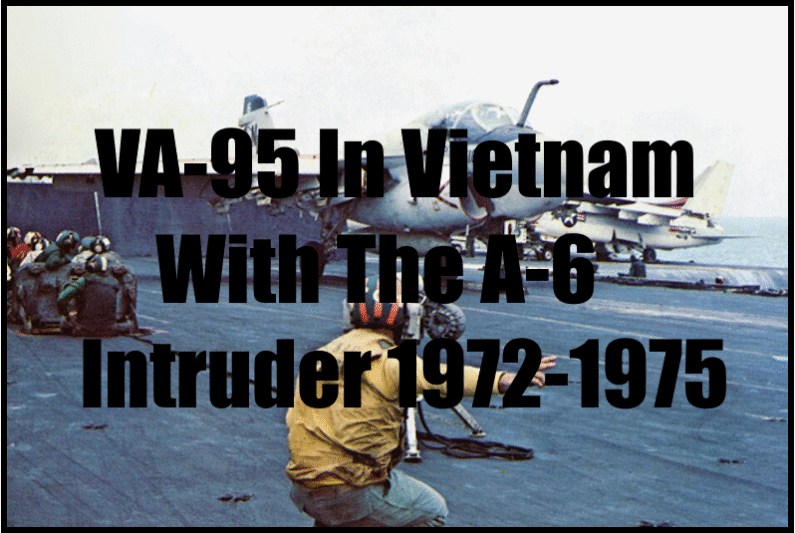
The story of VA-95 In Vietnam from 1972 through 1975 is very different from the squadron’s earlier Vietnam service with the A-1 Skyraider and A-4 Skyhawk. This was a new VA-95.
The Navy established Attack Squadron 95 at NAS Whidbey Island, Washington, on April 1, 1972. It was the third U.S. Navy squadron to carry the VA-95 designation. The squadron adopted the Green Lizards identity and entered service with one of the Navy’s most capable all-weather attack aircraft: the Grumman A-6 Intruder.
During the next three years, VA-95 would deploy twice aboard USS Coral Sea (CVA-43) with Carrier Air Wing Fifteen. The Green Lizards supported Operation End Sweep in 1973, covered Operation Frequent Wind during the fall of Saigon in April 1975, and flew combat missions during the SS Mayaguez crisis in May.
The period was short. But it included some of the final and most dramatic events of the Vietnam era.
A New VA-95 Is Established
VA-95 was established at NAS Whidbey Island on April 1, 1972. The VA-95 that had flown Skyraiders and Skyhawks during the 1950s and 1960s had been disestablished on April 1, 1970. The new squadron established two years later was not an official continuation of that unit.
It was the third squadron to use the VA-95 designation. However, it deliberately carried forward the Green Lizard traditions. The aircraft changed as well.
Instead of the lightweight A-4 Skyhawk, the new VA-95 became a medium attack squadron flying the Grumman A-6 Intruder.
VA-95 In Vietnam: Why the A-6 Intruder Was Different
During 1972–1975, VA-95 operated three important versions of the Intruder family:
- A-6A Intruder
- A-6B Intruder
- KA-6D Intruder tanker
Official Navy records show VA-95 receiving its first A-6A aircraft sometime between April and June 1972. The squadron received A-6B and KA-6D aircraft later that year, between October and December. This combination gave VA-95 several capabilities.
- The A-6A was an all-weather medium attack aircraft.
- The A-6B was a specialized version designed for attacking enemy air-defense radar sites.
- The KA-6D was an aerial-refueling tanker based on the Intruder airframe.
Together, they gave the squadron strike, suppression, and tanker capability. The A-6 represented a major advance in carrier attack aviation.
It was designed to attack targets at night and in bad weather. Unlike the single-seat Skyhawk, the A-6 had two crew members seated side by side. The pilot flew the aircraft. The bombardier-navigator managed navigation, radar, weapons delivery, and many mission systems.
The Intruder could carry a heavy weapons load and travel long distances from the carrier. The later A-6E became famous for precision attack capability, but during the 1972–1975 VA-95 period the Green Lizards were still flying the A-6A and A-6B. The A-6E would not arrive in VA-95 until February 4, 1976.
VA-95 In Vietnam: Carrier Air Wing Fifteen
VA-95 joined Carrier Air Wing Fifteen, commonly written as CVW-15. This air wing would be closely linked with VA-95 during the squadron’s first deployments.
CVW-15 also included fighter, light attack, reconnaissance, airborne early warning, and helicopter units from the following squadrons: VA-22, VA-94, VF-51, VF-111, VFP-63, VAW-111, VAQ-130, and HC-1. We would see VA-22 and VA-94 in CAG 11 in later years aboard the USS Enterprise.
VA-95 provided the air wing’s medium all-weather attack capability. The Green Lizards would deploy aboard USS Coral Sea. This aircraft carrier would become the central ship in VA-95’s 1972–1975 history.
VA-95 In Vietnam: USS Coral Sea
USS Coral Sea (CVA-43) was a Midway-class attack carrier and a veteran of years of operations in Southeast Asia. By the early 1970s, Coral Sea had already seen extensive Vietnam service.
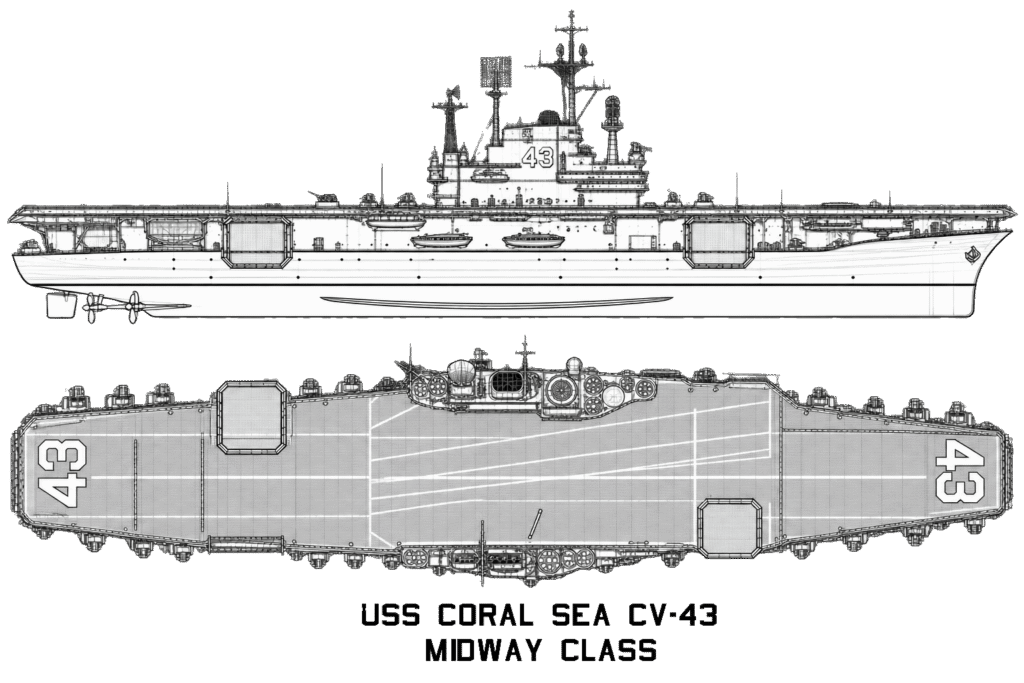
VA-95 joined CVW-15 aboard Coral Sea for its first major deployment beginning March 9, 1973 and continued through November 8, 1973.
Official Navy deployment records list VA-95 aboard Coral Sea with:
- A-6A Intruders
- A-6B Intruders
- KA-6D tankers
This was the first operational test for the newly established Green Lizards.
VA-95 In Vietnam: Operation End Sweep
VA-95’s first major operational assignment involved one of the final obligations created by the Vietnam peace agreement. The United States had mined North Vietnamese ports during Operation Pocket Money in 1972. The operation involved three VMA-224 A-6 Intruders carrying 1,000-pound (450 kg) Mk-52 magnetic mines to be dropped in Haiphong’s inner channel, and six Navy A-7 Corsair IIs carrying 500-pound (230 kg) Mk-36 acoustic mines to be dropped in the outer portion of the channel. Each plane would carry four mines
After the Paris Peace Accords, the United States agreed to remove those mines. The effort became Operation End Sweep. Operation End Sweep began in February 1973. Navy minesweepers, amphibious ships, helicopters, destroyers, support ships, and aircraft worked to clear North Vietnamese coastal waters and harbors.
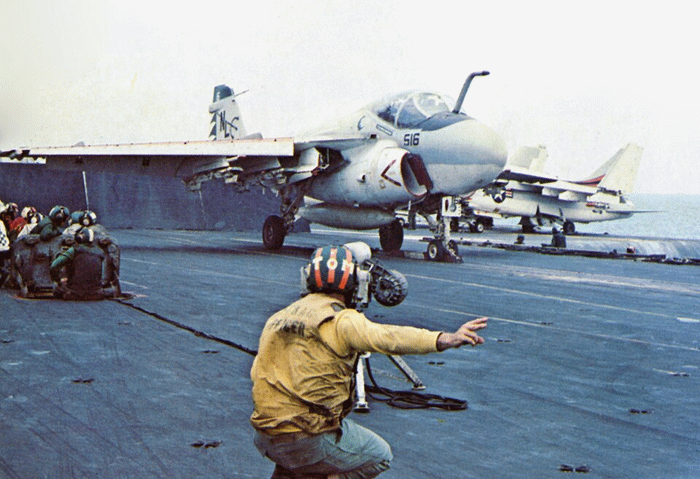
VA-95 supported Operation End Sweep, the clearing of minefields along the coast of North Vietnam. For a newly established squadron, this was a significant first deployment. Its Intruders and tanker aircraft helped provide the carrier air capability necessary to protect and support Task Force 78 operations.
VA-95 In Vietnam: End Sweep Comes to an End
Operation End Sweep continued through the summer of 1973. By July 18, 1973, the Seventh Fleet mine-countermeasures force had completed the operation and left North Vietnamese territorial waters.
VA-95’s first deployment continued until November 8. The Green Lizards had successfully completed their first WestPac cruise. Their next deployment would place them in the middle of the collapse of South Vietnam.
VA-95 In Vietnam: Back Aboard Coral Sea
VA-95 again deployed aboard USS Coral Sea with CVW-15 on December 5, 1974. The deployment would continue through July 2, 1975.
For this cruise, official Navy records list VA-95 with:
- A-6A Intruder
- KA-6D tanker
The A-6B was no longer listed as part of the squadron’s deployed complement for this cruise.
The political situation in Southeast Asia was changing rapidly. South Vietnam was collapsing. Cambodia was also falling to Communist forces.
The United States was preparing for evacuations.
VA-95 Squadron History: VA-95 In The Korean War-1952-1953
VA-95 In Vietnam: The Fall of South Vietnam
The Paris Peace Accords had ended direct American combat operations, but they did not end the war between North and South Vietnam. By early 1975, North Vietnamese forces were advancing rapidly. South Vietnamese positions were collapsing.
As Refugees moved south toward Saigon, American leaders realized the remaining U.S. personnel and many endangered Vietnamese might have to be evacuated. The U.S. Navy began moving carriers and amphibious forces into position.
By April 19, Coral Sea, Enterprise, Hancock, Midway, and Okinawa had received orders connected with evacuation planning.
VA-95 In Vietnam: VA-95 and Operation Frequent Wind
Operation Frequent Wind began on April 29, 1975. It was the final evacuation of Americans and selected Vietnamese from Saigon.

Coral Sea and Enterprise provided fixed-wing air cover for the evacuation force, while helicopters carried people from Saigon to American ships offshore. VA-95 aircraft participated in Operation Frequent Wind and flew armed escort missions over the Saigon area to protect the helicopters conducting the evacuation.
The squadron’s role was defensive but potentially critical. VA-95 provided armed protection in case hostile forces threatened the evacuation helicopters.
VA-95 In Vietnam: The SS Mayaguez Is Seized
On May 12, 1975, Khmer Rouge forces seized the American merchant ship SS Mayaguez near Cambodia. The ship’s capture came less than two weeks after the fall of Saigon. American leaders ordered military forces to recover the ship and its crew.
USS Coral Sea was directed toward the area.This time the Green Lizards would not simply provide armed cover. They would attack.
VA-95 In Vietnam: VA-95 Goes Into Combat
On May 15, American forces launched an operation involving Marines, Air Force helicopters and aircraft, Navy ships, and Coral Sea’s air wing. The fighting around Koh Tang Island became extremely intense.
Meanwhile, Coral Sea aircraft struck Cambodian mainland military targets. The Green Lizards flew sorties supporting the Marine landings on Koh Tang and participated in retaliatory strikes against Cambodian targets.
VA-95 aircraft attacked Ream Airfield and the naval facility at Ream. At 0830 on May 15, Coral Sea launched a strike package that included five A-7E Corsair IIs and two A-6A Intruders, protected by five F-4 Phantom II fighters. The aircraft bombed and strafed the airfield.
The attack cratered the runway, damaged facilities, and set a petroleum storage area on fire. Aircraft and antiaircraft positions were also damaged.
The Mayaguez operation also demonstrated the importance of VA-95’s KA-6D tankers. Combat missions require fuel. Strike aircraft sometimes have to remain airborne longer than expected. Other aircraft may need fuel before reaching their targets or before returning to the carrier.VA-95 KA-6Ds also supplied aerial-refueling support for combat sorties.
VA-95 In Vietnam: Two Deployments, One Carrier
Between 1972 and 1975, USS Coral Sea was the carrier most closely associated with VA-95. The squadron’s two major deployments were:
March 9–November 8, 1973
Carrier: USS Coral Sea (CVA-43)
Air Wing: CVW-15
Aircraft:
- A-6A
- A-6B
- KA-6D
Major mission:
Official Navy deployment and aircraft records confirm the cruise and aircraft assignment.
December 5, 1974–July 2, 1975
Carrier: USS Coral Sea (CVA-43)
Air Wing: CVW-15
Aircraft:
- A-6A
- KA-6D
Major operations:
Official Navy deployment records confirm these dates and VA-95’s deployed aircraft.
VA-95 In Vietnam: 1972–1975 Timeline
Important events include:
- April 1, 1972 — Third VA-95 established at NAS Whidbey Island.
- Spring 1972 — First A-6A Intruders received.
- Late 1972 — A-6B and KA-6D aircraft received.
- March 9, 1973 — VA-95 deploys aboard USS Coral Sea with CVW-15.
- April 1973 — VA-95 supports Operation End Sweep.
- July 18, 1973 — Operation End Sweep completed.
- November 8, 1973 — First VA-95 Coral Sea deployment ends.
- December 5, 1974 — VA-95 begins second Coral Sea deployment.
- April 29–30, 1975 — VA-95 participates in Operation Frequent Wind.
- May 15, 1975 — VA-95 flies combat missions during the SS Mayaguez operation.
- May 15, 1975 — VA-95 A-6As attack Ream Airfield and related military targets.
- May 15, 1975 — VA-95 KA-6Ds provide tanker support for combat sorties.
- July 2, 1975 — Coral Sea deployment ends.
- February 4, 1976 — VA-95 receives the A-6E Intruder, beginning the squadron’s next aircraft era.
Was VA-95 Still Fighting the Vietnam War in 1975?
This requires some historical care. The Paris Peace Accords had formally ended direct U.S. military involvement in Vietnam in 1973. So VA-95’s 1975 missions were not simply a continuation of Rolling Thunder or the earlier bombing war.
Operation Frequent Wind was an evacuation mission during the collapse of South Vietnam. The Mayaguez fighting took place in Cambodia after the fall of Saigon.
Still, both operations are part of the closing history of the Vietnam era. For veterans and historians, they form the final Southeast Asian combat chapter of the period.
From Vietnam to a New Era
When Coral Sea returned from deployment in July 1975, VA-95 had been an operational squadron for just over three years.
In that short time, the Green Lizards had already supported mine-clearance operations off North Vietnam, protected the evacuation of Saigon, attacked Cambodian military targets, supported Marines during the Mayaguez crisis, and provided airborne tanker support.
The squadron was only getting started. In February 1976, VA-95 began receiving the improved A-6E Intruder. The A-6E would carry the Green Lizards into the next phase of their history.
That future would include USS America, USS Enterprise, the Persian Gulf, Operation Earnest Will, and the dramatic combat of Operation Praying Mantis in 1988. But the foundation of that later reputation was built aboard USS Coral Sea.
The Legacy of VA-95 In Vietnam
VA-95 In Vietnam with the A-6 Intruder from 1972 through 1975 tells the story of a new squadron entering service as one war was ending and a new era of naval operations was beginning.
The Green Lizards arrived too late for the large bombing campaigns that had defined the earlier Vietnam War. Instead, they took part in its final chapters.
- They supported Operation End Sweep.
- They stood off South Vietnam as Saigon collapsed.
- They flew armed escort over the evacuation helicopters during Operation Frequent Wind.
- Then, only weeks later, they went into combat during the SS Mayaguez crisis.
- Their A-6A Intruders struck Cambodian military targets.
- Their KA-6D tankers helped keep combat aircraft in the air.
From the waters off North Vietnam to the skies over Saigon and Cambodia, VA-95 helped write the final pages of America’s long involvement in Southeast Asia.
For the Green Lizards, it was only the beginning of a new era.