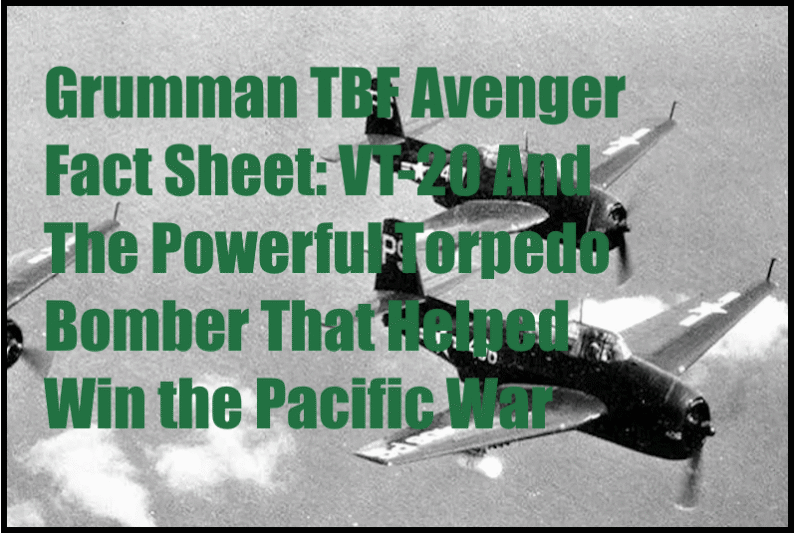
The Grumman TBF Avenger was big, tough, and built for war. Introduced during World War II, the Avenger became one of the most important carrier-based attack aircraft ever flown by the U.S. Navy.
Designed as a torpedo bomber, the Avenger could do much more than attack enemy ships. It carried bombs, torpedoes, rockets, depth charges, and other weapons. Avengers hunted submarines, attacked Japanese warships, bombed island positions, flew patrol missions, and supported American forces throughout the Pacific.
The aircraft also has an important connection to the history of Torpedo Squadron Twenty (VT-20) and the original lineage that later became VA-10A and VA-95.
For Navy veterans, aviation enthusiasts, model builders, and students of World War II, the Grumman TBF Avenger remains one of the great workhorses of American Naval Aviation.
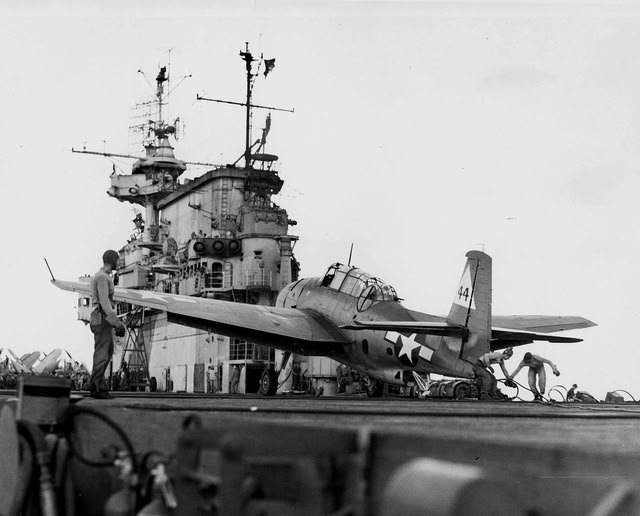
Why the U.S. Navy Needed the Grumman TBF Avenger
At the beginning of World War II, the Navy’s main carrier torpedo bomber was the Douglas TBD Devastator. The Devastator had been advanced when introduced in the 1930s, but aviation technology was moving fast. By 1940, the Navy needed something newer, faster, more powerful, and capable of carrying a heavier combat load.
Grumman developed the aircraft that became the Grumman TBF Avenger. The prototype first flew in August 1941, just months before the Japanese attack on Pearl Harbor. The Navy began receiving production aircraft in early 1942.
The timing could hardly have been more important. America was suddenly fighting a two-ocean war, and aircraft carriers would become one of the Navy’s most important weapons. The Avenger was about to get its chance.
Douglas AD Skyraider Fact Sheet: The Legendary VA-95 Navy Attack Aircraft in Combat
A Big Airplane for a Big Job
The Grumman TBF Avenger was a large aircraft by carrier standards. It had a wingspan of about 54 feet and weighed well over 10,000 pounds empty. Loaded for combat, it could weigh considerably more.
Power came from a Wright R-2600 Twin Cyclone radial engine, producing roughly 1,700 to 1,900 horsepower depending on the model. That engine gave the Avenger enough muscle to carry a torpedo or substantial bomb load while operating from an aircraft carrier.
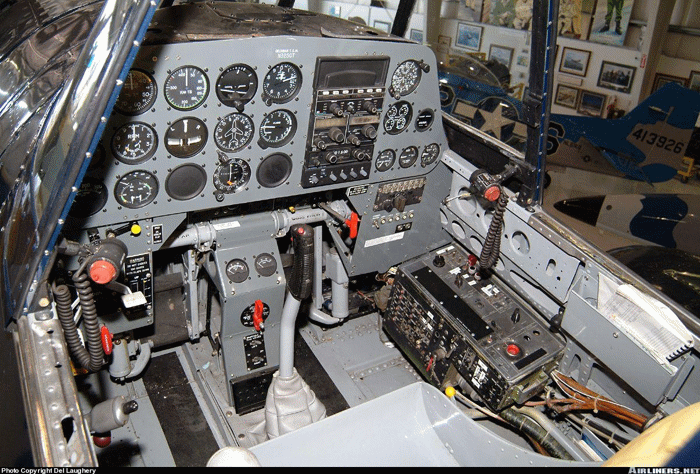
Its wings folded alongside the fuselage for storage. This was vital aboard carriers, where every foot of hangar and flight-deck space mattered. The Avenger was not a small or graceful-looking airplane.
It looked like a machine built to work. And that is exactly what it was.
The Three-Man Avenger Crew
Most Grumman TBF Avenger’s carried a crew of three. The pilot sat high in the forward cockpit. Behind him was the turret gunner, operating a powered dorsal turret armed with a .50-caliber machine gun. The third crewman served as a radioman and bombardier and could also operate a defensive machine gun from the lower rear position.
These men went into combat together. That is important when remembering Avenger crews. The pilot may appear most often in official records, but two other men were usually aboard that airplane when it entered enemy territory.
They shared the danger.
Weapons of the Grumman TBF Avenger
The Avenger’s most important feature was its large internal bomb bay. Its primary torpedo weapon was the Mark 13 aerial torpedo.
The aircraft could also carry conventional bombs and depth charges. Later Avengers could use rockets and other weapons. That flexibility became increasingly important as the war continued.
Despite being called a torpedo bomber, many Avenger missions did not involve torpedoes at all. An Avenger might attack a Japanese warship one day and bomb an airfield or troop position on another. Other Avengers searched for submarines or flew long-range patrols.
The aircraft proved adaptable enough to keep finding new jobs.
TBF Versus TBM Avenger: What’s the Difference?
One of the most common questions about the Grumman TBF Avenger concerns the TBF and TBM designations. The answer is fairly simple.
Grumman-built aircraft were designated TBF. Demand for Avengers became so great that production was transferred largely to the Eastern Aircraft Division of General Motors. Those aircraft were designated TBM. The basic aircraft remained the Avenger. Therefore:
TBF = Grumman-built Avenger
TBM = General Motors/Eastern Aircraft-built Avenger
General Motors eventually manufactured far more Avengers than Grumman. The National Naval Aviation Museum notes that more than 9,800 Avengers were produced overall, making the aircraft one of the most important American naval aircraft programs of the war.
The Grumman TBF Avenger Goes to War at Midway
The Avenger’s combat debut came during one of the most famous battles in U.S. Navy history—the Battle of Midway in June 1942. Six new TBF-1 Avengers assigned to VT-8 operated from Midway Island.
They attacked the Japanese carrier force on June 4. The results were terrible. Five of the six Avengers were shot down. The surviving aircraft returned badly damaged, with one crewman dead and another wounded. The problem was not simply the Avenger.
American torpedo attacks at Midway faced experienced Japanese fighter pilots, heavy antiaircraft fire, poor coordination, and serious problems with American aerial torpedoes. Despite those early losses, the Avenger remained in service. It would soon prove what it could do.
Replacing the TBD Devastator
The Battle of Midway effectively marked the end of the Devastator as a front-line Navy torpedo bomber. The Avenger took its place.
Over the following months, more Avengers reached carrier squadrons throughout the Pacific. They participated in the long campaign through the Solomon Islands and later accompanied the fast carrier forces as American naval power moved west across the Pacific.
By 1944, Avengers were everywhere. They attacked Japanese bases, ships, airfields, transportation systems, and defensive positions. They were also present during some of the largest carrier battles ever fought.
The Grumman TBF Avenger at the Battle of the Philippine Sea
In June 1944, American and Japanese carrier forces clashed during the Battle of the Philippine Sea. The battle became famous for the destruction of large numbers of Japanese aircraft during what American aviators called the “Great Marianas Turkey Shoot.”
Avengers participated in the long-range strike against the Japanese fleet on June 20. The returning American aircraft faced darkness and dangerously low fuel levels. U.S. carriers turned on their lights to help guide crews home despite the risk of enemy submarines.
Many aircraft were lost during the return. The battle demonstrated both the growing power of American carrier aviation and the dangers faced by the men who flew these missions.
VT-20 Grumman TBF Avengers and the Battle of Leyte Gulf
The Grumman TBF Avenger has a particularly important place in VT-20 squadron history.
Torpedo Squadron Twenty deployed aboard USS Enterprise (CV-6) in 1944 with TBM-1C Avengers.
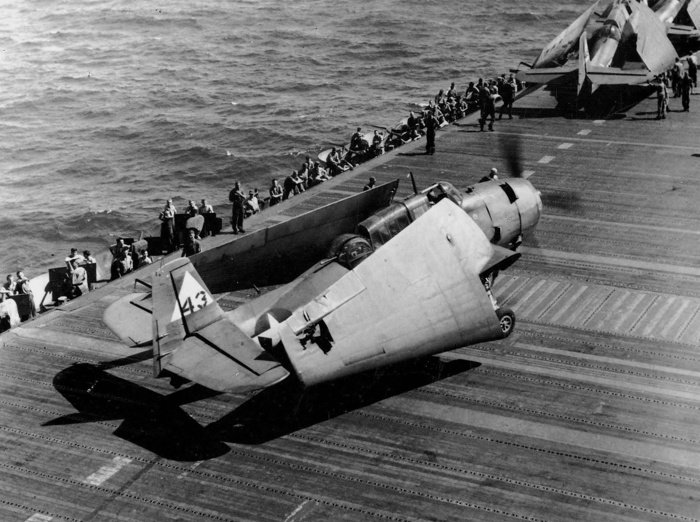
On October 24, 1944, during the Battle of Leyte Gulf, VT-20 participated in attacks against the powerful Japanese force moving through the Sibuyan Sea. One of the primary targets was the enormous Japanese battleship Musashi.
American carrier aircraft attacked Musashi repeatedly with bombs and torpedoes. The Navy’s official squadron history credits VT-20 with participating in the attacks that helped sink the battleship.
The following day, VT-20 Avengers attacked the Japanese carrier force during the Battle off Cape Engaño. VT-20 later transferred from Enterprise to USS Lexington (CV-16) and continued combat operations in the Western Pacific.
Avengers Against Japanese Battleships
The sinking of Musashi was not the only time Avengers attacked major Japanese warships.
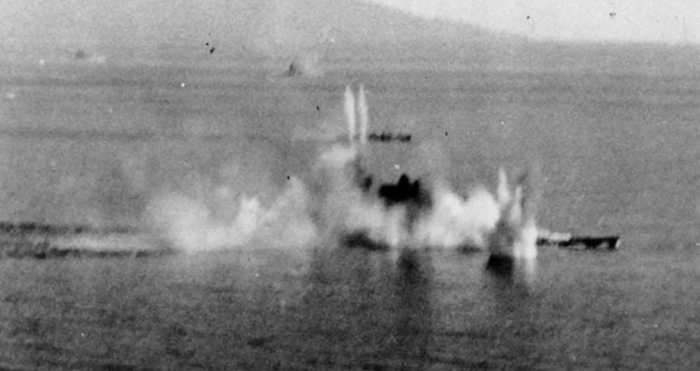
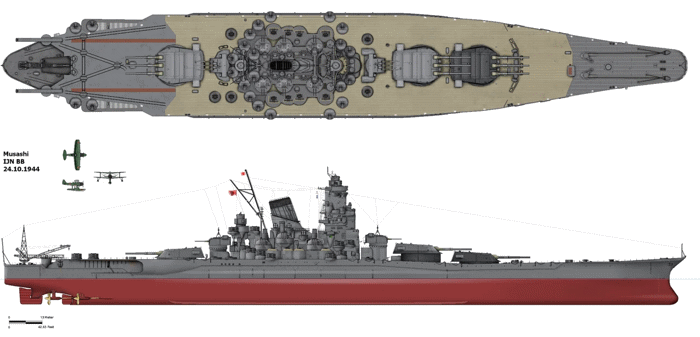
In April 1945, U.S. carrier aircraft attacked the Japanese battleship Yamato during Operation Ten-Go.
Yamato was attempting to reach Okinawa with a small supporting force. American carrier aircraft—including Avengers—hit the Japanese force with waves of attacks. Torpedo aircraft concentrated attacks against Yamato, contributing to the flooding that eventually caused the giant battleship to capsize and explode.
It was another demonstration of a major change in naval warfare. Aircraft could now destroy even the most heavily armed and armored battleships at sea.
George H. W. Bush and the Grumman TBF Avenger
One of the most famous Avenger pilots was future U.S. President George H. W. Bush. Bush flew TBM Avengers with VT-51 aboard USS San Jacinto (CVL-30).
On September 2, 1944, his aircraft was hit by antiaircraft fire while attacking Japanese installations on Chichi Jima. Bush completed his attack before turning away from the target. He eventually bailed out over the ocean and was rescued by the submarine USS Finback (SS-230). His two crewmen did not survive.
Bush later received the Distinguished Flying Cross. His experience was one of thousands of stories involving Avenger crews fighting across the Pacific.
Life After World War II
World War II ended in 1945, but the Grumman TBF Avenger’s career did not immediately end with it. The aircraft continued serving in several specialized roles, including antisubmarine warfare and airborne early warning.
The postwar Navy was changing rapidly as jet aircraft entered service, but piston-powered aircraft remained useful.
The Avenger also served with foreign military forces. Among its users were the British Royal Navy’s Fleet Air Arm, Royal Canadian Navy, French forces, and other nations.
Grumman TBF Avenger Became Fire Bombers
The Grumman TBF Avenger also found a surprising second career in civilian life. Its large size, rugged construction, and ability to carry a substantial load made it useful as an aerial firefighting aircraft. Converted Avengers became water bombers, dropping water and fire retardant on forest fires.
Other surviving aircraft went to museums, collectors, and restoration groups. Today, several Avengers remain airworthy.
Hearing one of those large radial engines start at an airshow gives visitors a small taste of what carrier flight decks must have sounded like during World War II.

Why the Grumman TBF Avenger Matters
The Grumman TBF Avenger was never as glamorous as the F6F Hellcat or F4U Corsair. It wasn’t supposed to be.
It was an attack aircraft. Its job was to carry weapons a long distance, find the enemy, attack, and—hopefully—bring three men home. The Avenger fought from Midway to the final months of World War II. It attacked carriers and battleships. It bombed airfields and island defenses. It hunted submarines. It flew patrol missions and supported amphibious operations.
It also served as the combat aircraft of VT-20, whose sailors and aircrews fought from USS Enterprise and USS Lexington before the squadron eventually became VA-10A and then the original VA-95.
That connection gives the Avenger a special place in VA-95 history.
Remembering the Grumman TBF Avenger and TBM Avenger
More than 80 years after its combat debut, the Avenger remains one of the most recognizable American naval aircraft of World War II. Its story is not simply about Grumman, General Motors, radial engines, torpedoes, or famous battles.
It is about people.
- Pilots flew it.
- Gunners defended it.
- Radiomen and bombardiers went into combat inside it.
- Maintainers worked through the night to repair it.
- Ordnancemen loaded its weapons.
- Plane captains prepared it for another mission.
- Flight-deck crews launched it from carriers pitching in the Pacific.
And sometimes three empty seats reminded everyone that a crew had not returned. From Midway and Leyte Gulf to the sinking of Musashi and Yamato, the TBF/TBM Avenger helped demonstrate that naval warfare had changed forever.
The battleship was no longer the unquestioned ruler of the sea. The aircraft carrier had taken its place. And one of the aircraft that helped make that revolution possible was the big, rugged, hardworking Grumman TBF Avenger.
Once a Lizard, always a Lizard.

Want more Green Lizard articles like this? Subscribe to our VA-95 All Weather Attack newsletter today and get VA-95-focused news, announcements, and website updates delivered straight to your inbox.