
The story of VA-95 in Vietnam with the AD Skyraider begins before the United States entered the large air war most people remember. From 1963 through 1965, VA-95 moved from Cold War readiness missions to combat operations over Laos and North Vietnam. The squadron flew the rugged Douglas A-1 Skyraider from USS Ranger (CVA-61) as part of Carrier Air Group Nine, later Carrier Air Wing Nine.
These years were a turning point for VA-95. In 1963, its Skyraiders stood ready during a crisis in Laos. By late 1964, the squadron was supporting photo-reconnaissance missions and striking targets in Laos. In February 1965 came Operation Flaming Dart. In March came Operation Rolling Thunder.
For VA-95’s pilots, maintainers, ordnancemen, plane captains, and other sailors, the Cold War was turning into a shooting war. It was also the final combat chapter for VA-95’s famous propeller-driven Skyraiders. The squadron would begin moving to the A-4 Skyhawk in 1965.
VA-95 and the AD Skyraider
VA-95 had a long history with the Douglas AD Skyraider. The squadron began receiving the AD-6 in October 1953, shortly after returning from the Korean War. In September 1956, it began receiving the improved AD-7. By 1963, VA-95 was operating the A-1H and A-1J.
By the early 1960s, U.S. Navy carrier decks were filling with jets. The F-4 Phantom II, A-4 Skyhawk, F-8 Crusader, and other jet aircraft represented the future.
The Skyraider looked like it belonged to another age. It had a piston engine and a large propeller. But the A-1 had several important advantages.
It could carry a heavy weapons load. It could remain airborne for hours. It could fly at lower speeds that were useful when searching for ground targets. It could carry bombs, rockets, guns, and other weapons. Those qualities made the Skyraider especially useful during the early fighting over Southeast Asia. The aircraft was sometimes called the “Spad,” a nickname comparing it with the old World War I fighter.
There was nothing outdated about what it could do to a target.
USS Ranger: VA-95’s Carrier
One ship dominates VA-95’s history from 1963 through the squadron’s early Vietnam combat period: The USS Ranger (CVA-61).
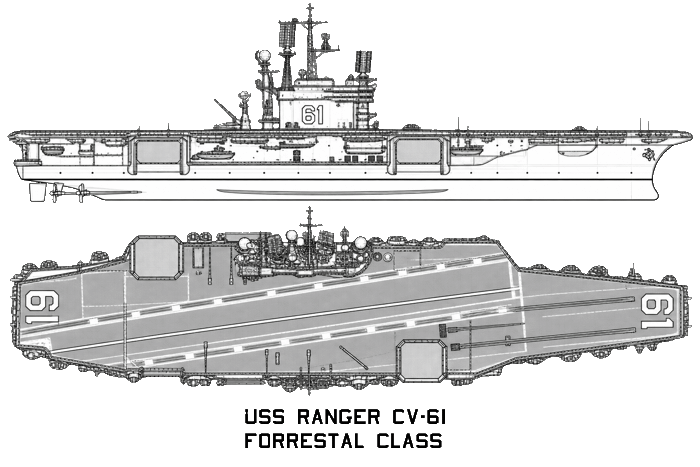
Ranger was a Forrestal-class attack carrier. She was much larger than the Essex-class carriers VA-95 had operated from during the 1950s. VA-95 served aboard Ranger with Carrier Air Group Nine.
The partnership between VA-95, CVW-9, and Ranger would carry the squadron directly into the expanding conflict in Southeast Asia.
VA-95 In Vietnam with the AD Skyraider: Trouble in Laos
VA-95 began 1963 aboard Ranger during a Western Pacific deployment that had started on November 9, 1962.
One interesting milestone occurred in January 1963. VA-95 participated in cross-deck operations with the British aircraft carrier HMS Hermes. Cross-deck operations gave allied navies valuable experience operating aircraft and personnel between different carriers. They also helped strengthen cooperation between allied naval forces.
A more serious event followed in May. The political and military situation in Laos was getting worse. Neutralist forces had suffered losses to the Communist Pathet Lao in the Plain of Jars. And American leaders worried that the situation could expand. VA-95 had been moved toward a possible combat operation in Southeast Asia.
It would not be the last time.
VA-95 In Vietnam with the AD Skyraider: The 1963 Deployment Ends
Ranger returned to Alameda on June 14, 1963. VA-95’s deployment was over. The carrier then entered the San Francisco Naval Shipyard for an overhaul that lasted into February 1964. Among other changes, Ranger received a larger flight deck.
By August 1964, Ranger and VA-95 were preparing to head west again. This time, events were moving much faster.
VA-95 In Vietnam with the AD Skyraider: VA-95 Heads Toward Vietnam 1964
The USS Ranger embarked Carrier Air Wing Nine on August 5, 1964, and headed toward the Western Pacific moving quickly across the Pacific. The carrier stopped briefly at Pearl Harbor before continuing toward Subic Bay in the Philippines and Yokosuka, Japan.
On October 17, 1964, Ranger became flagship of the commander of Fast Carrier Task Force 77. Task Force 77 was the Navy’s carrier striking force in the Western Pacific.
VA-95 was now part of a force increasingly focused on Southeast Asia. Official Navy deployment records list VA-95 aboard Ranger with both A-1H and A-1J Skyraiders. Other CVW-9 squadrons operated aircraft including the F-4B Phantom II, A-4 Skyhawk, RA-5C Vigilante, RF-8A Crusader, A-3 Skywarrior, and E-1B Tracer. And VA-95’s propeller-driven Skyraiders still had an important job.
VA-95 In Vietnam with the AD Skyraider: VA-95 and the Yankee Team Era
One of the most interesting parts of VA-95 history began in November 1964. The Navy’s official squadron history states that from November 1964 through April 1965, VA-95 supported photo-reconnaissance missions and conducted strikes against targets in Laos.
These operations took place during the broader Yankee Team era. Yankee Team was a joint U.S. reconnaissance effort over Laos. American aircraft photographed roads, Communist positions, transportation routes, and evidence of North Vietnamese infiltration.
The missions were dangerous.
Reconnaissance aircraft sometimes had to fly where enemy antiaircraft weapons could reach them. This created a need for armed aircraft capable of supporting reconnaissance flights.
The Skyraider’s endurance made it useful in this environment.
VA-95 In Vietnam with the AD Skyraider: Were VA-95’s Missions Part of Operation Yankee Team?
This question requires careful wording. Official Navy records clearly state that VA-95 supported photo-reconnaissance missions and conducted strikes in Laos between November 1964 and April 1965.
However, the published VA-95 squadron chronology does not label every one of those sorties as an Operation Yankee Team mission.
It is therefore more accurate to say:
VA-95 supported photo-reconnaissance operations and flew strikes over Laos during the Yankee Team period. That wording makes the connection without claiming more than the available evidence proves. More detailed operational reports, carrier records, and Navy message traffic may identify individual sorties and assignments.
VA-95 In Vietnam with the AD Skyraider: December 1964: Barrel Roll
The air war over Laos was changing. Reconnaissance alone was no longer enough.
On December 17, 1964, aircraft from Ranger conducted the Navy’s first armed reconnaissance mission over eastern Laos under the joint Navy-Air Force program known as Operation Barrel Roll. A-1H Skyraiders were part of the mission, along with F-4B Phantom escorts and RF-8A photo-reconnaissance aircraft.
The aircraft searched likely infiltration routes for Communist vehicles and other targets. If targets of opportunity could not be found, aircraft could attack certain approved military targets.
The mission showed how American policy was changing.
- First came reconnaissance.
- Then came armed protection.
- Now aircraft were actively searching for targets.
- The conflict was moving closer to open war.
VA-95 In Vietnam with the AD Skyraider: 1965: The War Expands
The new year brought little relief. Ranger and CVW-9 remained in the region. VA-95’s Skyraiders continued operating as the United States became more deeply involved in Southeast Asia.
Then came February 7, 1965. Viet Cong forces attacked the American installation at Pleiku in South Vietnam. and American personnel were killed and wounded.
President Johnson ordered a retaliatory strike against North Vietnam. The operation became known as Flaming Dart I.
VA-95 received a combat assignment.
VA-95 In Vietnam with the AD Skyraider: Operation Flaming Dart I
The official VA-95 history identifies the squadron’s target for Flaming Dart I as the Vit Thu Lu Barracks. VA-95 prepared to strike.
But weather became the enemy. Poor conditions prevented the squadron from completing the attack, and its aircraft turned back.
Flaming Dart I showed how quickly VA-95 could be ordered from reconnaissance-support operations into a retaliatory strike against North Vietnam.
Four days later, it happened again.
VA-95 In Vietnam with the AD Skyraider: Flaming Dart II
Another Communist attack occurred at Qui Nhon. The United States responded with Operation Flaming Dart II on February 11, 1965.
This time VA-95 participated in the attack. Official Navy squadron records state that VA-95 aircraft took part in retaliatory strikes against the Chanh Hoa military barracks near Dong Hoi, North Vietnam.
Aircraft from Ranger, Hancock, and Coral Sea participated in the larger operation. This was an important milestone for VA-95.
The squadron that had spent years conducting Cold War deployments was now directly attacking North Vietnamese targets. The Vietnam air war was expanding.
VA-95 In Vietnam with the AD Skyraider: Operation Rolling Thunder
The next step was even larger. Operation Rolling Thunder became the sustained American bombing campaign against North Vietnam.
The campaign officially began in March 1965. On March 15, Navy carrier aircraft joined a major strike against the Phu Qui ammunition depot.
VA-95 participated.
Official squadron history specifically credits VA-95 with Rolling Thunder strikes against Phu Qui. Navy historical accounts record that 64 Skyhawks and Skyraiders, supported by another 30 aircraft from Ranger and Hancock, attacked the ammunition depot.
For VA-95, this marked another major step. The squadron had gone from supporting reconnaissance over Laos to participating in sustained bombing operations against North Vietnam.
VA-95 In Vietnam with the AD Skyraider: Fifty-Nine Days on Yankee Station
Carrier warfare demanded more than a single strike. It required keeping aircraft flying day after day. During March 1965, Ranger completed what was then a record 59 continuous days on Yankee Station.
Yankee Station was the carrier operating area in the Gulf of Tonkin from which Navy aircraft launched missions against targets in Southeast Asia. Yankee Station should not be confused with Yankee Team. They were different.
Yankee Team was associated with reconnaissance operations over Laos. Yankee Station was the operating area used by aircraft carriers conducting the air war. VA-95 experienced both parts of this early Vietnam story.
VA-95 In Vietnam with the AD Skyraider: The End of VA-95’s Skyraider Era
Ranger’s deployment ended in May 1965. Official Navy records give the overall deployment dates as August 5, 1964, through May 6, 1965.
VA-95 returned from a cruise very different from the Cold War deployments of the previous decade.
- The squadron had supported reconnaissance missions.
- It had struck targets in Laos.
- It had been assigned a target during Flaming Dart I.
- It had participated in Flaming Dart II.
- It had joined Rolling Thunder strikes against North Vietnam.
And now another major change was coming. VA-95 was going to jets. The squadron received its first A-4C Skyhawk in July 1965. A-4B aircraft followed in December.
The long VA-95 Skyraider era was ending.
VA-95 In Vietnam with the AD Skyraider: VA-95 Skyraider Timeline, 1963–1965
Key milestones from this period include:
- January 1963 — VA-95 conducted cross-deck operations with HMS Hermes.
- May 1963 — Ranger moved into the South China Sea during the Laos crisis.
- June 14, 1963 — Ranger returned from its Western Pacific deployment.
- August 1964 — VA-95 deployed again aboard Ranger with CVW-9.
- October 1964 — Ranger became flagship of Fast Carrier Task Force 77.
- November 1964–April 1965 — VA-95 supported photo-reconnaissance missions and struck targets in Laos.
- December 1964 — Ranger aircraft began armed reconnaissance operations under Barrel Roll.
- February 7, 1965 — VA-95 was assigned the Vit Thu Lu Barracks during Flaming Dart I but turned back because of weather.
- February 11, 1965 — VA-95 participated in Flaming Dart II against Chanh Hoa.
- March 1965 — VA-95 participated in Rolling Thunder strikes against the Phu Qui ammunition depot.
- March 1965 — Ranger completed a then-record 59 continuous days on Yankee Station.
- May 6, 1965 — Ranger’s deployment ended.
VA-95 In Vietnam with the AD Skyraider: Why the VA-95 Skyraider Years Matter
VA-95’s 1963–1965 history captures a major change in American naval aviation. At the beginning of the period, VA-95 was a Cold War attack squadron. Its Skyraiders stood ready aboard Ranger during the 1963 Laos crisis.
Then the mission changed.
- Reconnaissance support over Laos led into strike missions.
- Barrel Roll expanded armed reconnaissance.
- Flaming Dart brought retaliatory attacks against North Vietnam.
- Rolling Thunder began sustained bombing.
In only a few years, VA-95 had moved from Cold War readiness to combat. The aircraft that carried the squadron through that transition was the Douglas A-1 Skyraider.
- It was not a jet.
- It was not new.
- But it could carry a tremendous weapons load, remain airborne for hours, and take the fight deep into Southeast Asia.
For the VA-95 veterans who flew, maintained, armed, fueled, launched, and recovered those aircraft, the Skyraider was more than an old propeller-driven attack plane.
It was the aircraft that carried VA-95 into the Vietnam War.
And aboard USS Ranger, the sailors and aviators of VA-95 helped write one of the opening chapters of the U.S. Navy’s long carrier air war over Southeast Asia.
Once a Lizard, always a Lizard.

Want more Green Lizard articles like this? Subscribe to our VA-95 All Weather Attack newsletter today and get VA-95-focused news, announcements, and website updates delivered straight to your inbox.