Navy Awards Precedence
VA-95 Squadron Awards: Presidential Unit Citation (PUC)
The Presidential Unit Citation (PUC), originally called the Distinguished Unit Citation, is awarded to units of the uniformed services of the United States, and those of allied countries, for extraordinary heroism in action against an armed enemy on or after 7 December 1941
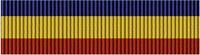
VT-20 Presidential Unit Citation for 14 Dec 1944 16 Dec 1944
The Presidential Unit Citation (Navy) awarded to Torpedo Squadron 20 (VT-20) covers their actions from December 14 to 16, 1944, while operating as part of Carrier Air Group 20 aboard the aircraft carrier USS Lexington (CV-16). During this specific three-day window, VT-20 participated in intense airstrikes against Japanese positions, airfields, and shipping in and around Luzon, Philippines. These strikes were designed to destroy Japanese air capabilities and sever supply lines to support the ongoing Allied liberation of the Philippines.
VT-20 Presidential Unit Citation for 03 Jan 1945 22 Jan 1945
Torpedo Squadron 20 (VT-20) was awarded the Navy and Marine Corps Presidential Unit Citation for extraordinary heroism in action during the specific period of January 3 to January 22, 1945. During this period, VT-20 was operating as part of Air Group 20 attached to the aircraft carrier USS Lexington (CV-16). During January 3–22, 1945, VT-20 flew TBM Avenger torpedo and bombing missions supporting the Luzon invasion and Lingayen Gulf operations. They neutralized Formosa airfields, swept the South China Sea for shipping, and struck the Ryukyu Islands to disrupt enemy reinforcements.
Read the citation.
VA-95 Squadron Awards: Joint Meritorious Unit Award (JMUA)
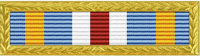
Authorized by the Secretary of Defense on June 10, 1981, this award was originally called the Department of Defense Meritorious Unit Award. It is awarded in the name of the Secretary of Defense to joint activities for meritorious achievement or service, superior to that which is normally expected, for actions in the following situations; combat with an armed enemy of the United States, a declared national emergency, or under extraordinary circumstances that involve national interests
The Joint Meritorious Unit Award (JMUA) was awarded to Attack Squadron 95 (VA-95) for its participation in Operation Praying Mantis. During the designated period of 18 April 1988 to 19 Apr 1988, VA-95 (known as the “Green Lizards”) operated A-6E Intruder aircraft from the USS Enterprise (CVN-65). The unit was a key participant in the one-day retaliatory strike against Iranian naval forces and tactical command assets in the Persian Gulf.
- Sinking of the IRIS Sahand: VA-95 A-6Es engaged the Iranian frigate after it fired upon them, dealing catastrophic hits with Harpoon and laser-guided Skipper missiles.
- Crippling of the IRIS Sabalan: Later that afternoon, a VA-95 aircrew dropped a laser-guided bomb directly down the stack of the hostile frigate IRIS Sabalan, neutralizing its threat.
- Engagement of Boghammar Speedboats: The squadron successfully deployed cluster munitions to sink and disperse Iranian fast-attack craft targeting civilian shipping infrastructure.
Read the citation.
VA-95 Squadron Awards: Navy Unit Commendation (NUC)
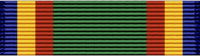
Navy and U.S. Marine Corps commands may recommend any Navy or Marine Corps unit for the Navy Unit Commendation that has distinguished itself by outstanding heroism in action against the enemy, but not sufficient to justify the award of the Presidential Unit Citation. A unit must have performed service of a character comparable to that which would merit the award of a Silver Star Medal for heroism, or a Legion of Merit for non-combat meritorious service to an individual.
VT-20 Navy Unit Commendation for 31 Aug 1944 18 Sep 1944
Torpedo Squadron 20 (VT-20) was officially awarded the Navy Unit Commendation (NUC) for its operations from August 31, 1944, to September 18, 1944. During this designated window, VT-20—nicknamed the “Vultures” and flying the TBM Avenger as part of Carrier Air Group 20 (CVG-20)—embarked on its first major combat deployment of World War II. Operating from the aircraft carrier USS Enterprise (CV-6), the squadron achieved the following milestones that earned them this distinction.
- August 31, 1944: Cleared for their very first combat actions of the war, launching aggressive strikes against entrenched Japanese positions on the Bonin Islands.
- September 1944: Shifted focus south to provide critical pre-invasion bombardment strikes and ongoing close-
- air support for amphibious forces landing on the Palau Islands, including heavily contested operations on Peleliu Island.
VT-20 Navy Unit Commendation for 10 Oct 1944 22 Nov 1944
Torpedo Squadron 20 (VT-20) was officially awarded the Navy Unit Commendation (NUC) for its actions during the period from October 10, 1944, to November 22, 1944. During these dates, VT-20 was operating as part of Air Group 20 attached to the aircraft carrier USS Enterprise (CV-6) under Task Force 38. The squadron flew TBM-1C Avenger torpedo bombers. The citation covers intense combat operations across the Pacific War Area, specifically targeting:
- The Ryukyus & Formosa (Taiwan): Striking enemy airfields and shipping installations to neutralize Japanese air power.
- The Philippines & Luzon: Providing crucial air support during the initial Leyte landings and the historic Battle of Leyte Gulf (including major strikes in the Sibuyan Sea and Cape Engaño)
VA-95 Navy Unit Commendation for 31 Jan 1953 27 Jul 1953
Attack Squadron 95 (VA-95), part of Carrier Air Group 9 (CVG-9) aboard the aircraft carrier USS Philippine Sea (CVA-47), was awarded the Navy Unit Commendation (NUC) for the specific combat deployment period spanning 31 January 1953 through 27 July 1953 during the Korean War
VA-95 Squadron Awards: Meritorious Unit Commendation (MUC)
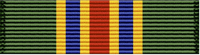
The Meritorious Unit Commendation (MUC; pronounced muck) is a mid-level unit award of the United States Armed Forces. The U.S. Army awards units the Army MUC for exceptionally meritorious conduct in performance of outstanding achievement or service in combat or non-combat, the U.S. Navy and U.S. Marine Corps award units the Navy MUC for valorous or meritorious achievement or service in combat or non-combat.
VA-95 Meritorious Unit Commendation for 22 Apr 1975 – 30 Apr 1975
Attack Squadron 95 (VA-95) earned the Navy Meritorious Unit Commendation (MUC) for the exact period of 22 April 1975 to 30 April 1975. During this time frame, the “Green Lizards” of VA-95 were deployed aboard the aircraft carrier USS Coral Sea (CV-43) as part of Carrier Air Wing 15 (CVW-15). The squadron earned this collective decoration for its vital role in Operation Frequent Wind, the historic and chaotic evacuation of American personnel and at-risk Vietnamese civilians from Saigon as South Vietnam collapsed.
VA-95 Meritorious Unit Commendation for 15 May 1975
The VA-95 “Green Lizards” (Attack Squadron 95) was awarded the Navy Meritorious Unit Commendation (MUC) for actions on 15 May 1975 as part of Carrier Air Wing 15 (CVW-15) embarked aboard the aircraft carrier USS Coral Sea (CV-43). The award recognizes the squadron’s critical role in the SS Mayaguez incident, widely considered the final battle of the Vietnam War.
VA-95 Meritorious Unit Commendation for 15 Feb 1988 – 21 May 1988
The Navy Meritorious Unit Commendation (MUC) awarded to Attack Squadron 95 (VA-95 “Green Lizards”) for the period from 15 February 1988 to 21 May 1988 recognizes the squadron’s exceptional service during a highly volatile period in the Persian Gulf. During these specific dates, VA-95 was embarked aboard the aircraft carrier USS Enterprise (CVN-65). Operating in the Middle East, the squadron was deployed in support of Operation Earnest Will (the protection of reflagged Kuwaiti oil tankers) and actively participated in Operation Praying Mantis on April 18, 1988.
VA-95 Squadron Awards: Navy “E” Ribbon (NAVE)
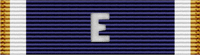
The Navy “E” Ribbon or Battle Efficiency Ribbon (informally the Battle “E” ribbon) was authorized on March 31, 1976, by Secretary of the Navy J. William Middendorf as a unit award for battle efficiency competition. The service ribbon replaced the “E” patch previously sewn on the right sleeve of the enlisted naval uniform for rates/pay grades E-1 through E-6
- 01 Jul 1980 31 Dec 1981
- 01 Jan 1988 31 Dec 1988 (read the citation)
- 01 Jan 1990 31 Dec 1990
VA-95 Squadron Awards: Navy Expeditionary Medal (NEM)
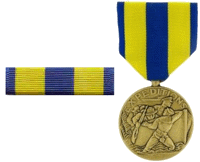
The General Orders of the Department of the Navy which established the medal states, “The medal will be awarded to the officers and enlisted men of the Navy who were confirmed to have landed on foreign territory and engaged in operations against armed opposition, or operated under circumstances which, after full consideration, shall be deemed to merit special recognition and for which no service or campaign medal has been awarded. The Navy Expeditionary Medal is retroactively authorized to February 12, 1874.
VA-95 Navy Expeditionary Medal for 09 May 1981 – 18 Oct 1981
During this exact time frame, VA-95 was a part of Carrier Air Wing 11 (CVW-11) embarked aboard the USS America (CV-66). The ship and its embarked air wing earned the medal for operations in the Indian Ocean/Arabian Sea, notably becoming the first U.S. Navy super carrier to transit the Suez Canal since 1967.
VA-95 Navy Expeditionary Medal for 30 Apr 1986 – 27 Jun 1986
The Navy Expeditionary Medal covering the period from 30 Apr 1986 to 27 Jun 1986 is tied to operations in the Mediterranean Sea / Indian Ocean, specifically linked to the deployment of its embarked carrier. During this timeframe, VA-95 (known as the “Green Lizards”) was embarked aboard the aircraft carrier USS Enterprise (CVN-65), executing operations in proximity to North Africa and the Middle East following the geopolitical tensions and military strikes involving Libya (such as Operation El Dorado Canyon)
- 09 May 1981 18 Oct 1981
- 30 Apr 1986 27 Jun 1986
VA-95 Squadron Awards: Armed Forces Expeditionary Medal (AFEM)
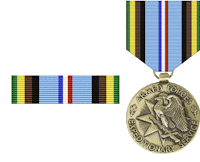
The Armed Forces Expeditionary Medal (AFEM) is a military award of the United States Armed Forces, which was first created in 1961 by Executive Order of President John F. Kennedy. The medal is awarded to members of the U.S. Armed Forces who, after July 1, 1958, participated in U.S. military operations, U.S. operations in direct support of the United Nations, or U.S. operations of assistance for friendly foreign nations.
- 19 Sep 1964 20 Sep 1964
- 01 Oct 1964 09 Oct 1964
- 28 Nov 1964 30 Dec 1964
- 17 Jan 1965 17 Mar 1965
- 04 Apr 1965 13 Apr 1965
- 29 Apr 1975 30 Apr 1975
- 15 May 1975
- 15 Feb 1988 09 Mar 1988
- 25 Mar 1988 19 Apr 1988
VA-95 Squadron Awards: Vietnam Service Medal (VNSM)
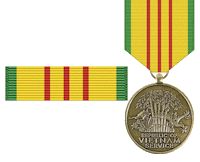
The Vietnam Service Medal was a military award of the United States Armed Forces established on 8 July 1965 by order of President Lyndon B. Johnson. The medal is awarded to recognize service during the Vietnam War by all members of the U.S. Armed Forces provided they meet the award requirements.
VA-95 Vietnam Service Medal for 15 May 1966 – 15 Jun 1966
During the period from 15 May 1966 to 15 Jun 1966, personnel assigned to Attack Squadron 95 (VA-95) aboard the USS Intrepid (CVS-11) qualified for the Vietnam Service Medal (VSM) under the official DoD campaign known as the Vietnam Counteroffensive Campaign. The specific window of interest (15 May – 15 June 1966) marks the beginning stretch of VA-95’s combat operations launched from Dixie Station off the coast of South Vietnam.
VA-95 Vietnam Service Medal for 08 Jul 1966 – 10 Aug 1966
For the service period of 08 Jul 1966 – 10 Aug 1966, personnel serving with Attack Squadron 95 (VA-95) “Green Lizards” qualify for the Vietnam Service Medal (VSM) under the Vietnam Counteroffensive, Phase II Campaign. During this exact time frame, VA-95 was flying Douglas A-4B Skyhawk as part of Carrier Air Wing 10 (CVW-10) embarked aboard the aircraft carrier USS Intrepid (CVS-11). The ship was deployed on its unique all-attack-aircraft combat cruise to Yankee Station off the coast of Vietnam, actively participating in Operation Rolling Thunder strike missions.
VA-95 Vietnam Service Medal for 01 Sep 1966 – 23 Sep 1966
During the specified period of 01 Sep 1966 – 23 Sep 1966, the U.S. Navy’s Attack Squadron 95 (VA-95), was embarked aboard the aircraft carrier USS Intrepid (CVS-11) as part of Attack Carrier Air Wing 10 (CVW-10). This time frame directly covers the squadron’s third combat line period of their 1966 deployment. Operating from Yankee Station in the Gulf of Tonkin, the squadron flew Douglas A-4B Skyhawk attack aircraft on combat sorties over North Vietnam.
VA-95 Vietnam Service Medal for 2 Oct 1966 – 18 Oct 1966
During the period from 2 Oct 1966 to 18 Oct 1966, Attack Squadron 95 (VA-95) was embarked aboard the aircraft carrier USS Intrepid (CVS-11) as part of Carrier Air Wing 10 (CVW-10) on a combat deployment to Vietnam. This specific time frame falls under the official DoD Vietnam Counteroffensive, Phase II campaign (July 1, 1966 – May 31, 1967).
VA-95 Squadron Awards: Humanitarian Service Medal (HSM)
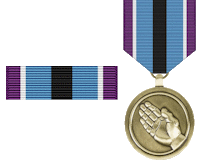
The Humanitarian Service Medal (HSM) is a military service medal of the United States Armed Forces which was created on January 19, 1977 by President Gerald Ford under Executive Order 11965. The medal may be awarded to members of the United States military (including Reserve and National Guard members) who distinguish themselves by meritorious participation in specified military acts or operations of a humanitarian nature
VA-95 Humanitarian Service Medal for 29 Apr 1975 – 30 Apr 1975
Attack Squadron 95 (VA-95) personnel who participated in Operation Frequent Wind during the evacuation of Saigon from 29 April to 30 April 1975.
VA-95 Humanitarian Service Medal for 23 Oct 1982
Personnel assigned to Attack Squadron 95 (VA-95 “Green Lizards”) became eligible for the Humanitarian Service Medal (HSM) due to their direct participation in the rescue of Vietnamese refugees (“boat people”) in the South China Sea around October 23–24, 1982
VA-95 Squadron Awards: Republic of Korea Presidential Unit Citation (KPUC)
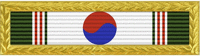
The Republic of Korea Presidential Unit Citation is a military unit award of the government of Republic of Korea that may be presented to South Korean and foreign military units for outstanding performance in defense of the Republic of Korea
VA-95 Republic of Korea Presidential Unit Citation for 25 Jan 1953 – 27 Jul 1953
Attack Squadron 95 (VA-95) was officially awarded the Republic of Korea Presidential Unit Citation for its combat actions during the final phases of the Korean War, covering the period from January 25, 1953 to July 27, 1953. During these specific dates, VA-95 (known as the “Skyknights“) was attached to Carrier Air Group 9 (CVG-9). They flew the Douglas AD-4 Skyraider—a rugged, propeller-driven attack aircraft—operating in the Sea of Japan as part of Task Force 77. The award timeframe covers the grueling final six months of the Korean War leading up to the signing of the armistice on July 27, 1953.
- High Sortie Rates: During this final stretch, VA-95 was heavily engaged in close air support for United Nations ground troops and conducted intensive interdiction strikes. In the final 12 days of the war alone (July 15–27, 1953), CVG-9 launched over 1,000 combat sorties to blunt massive Chinese and North Korean counteroffensives.
- Dangerous Conditions: VA-95 flew heavily armed strike missions targeting supply lines, bridges, and enemy artillery positions, frequently braving intense anti-aircraft fire.
VA-95 Squadron Awards: Campaign Medal (Asiatic-Pacific)
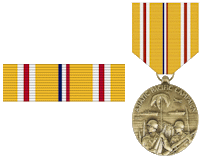
The Asiatic–Pacific Campaign Medal was a United States military award of the Second World War, which was awarded to any member of the United States Armed Forces who served in the Asiatic-Pacific Theater from 1941 to 1945.
VT-20 Campaign Medal (Asiatic-Pacific) for 31 Aug 1944 – 18 Sep 1944
The service of Torpedo Squadron 20 (VT-20) during the period from August 31, 1944, to September 18, 1944, falls under the Western Caroline Islands Operation official campaign of the Asiatic-Pacific Campaign Medal. Campaign Name: Western Caroline Islands Operation (specifically Palau, Yap, Ulithi, and Woleai raids/assaults).
VT-20 Campaign Medal (Asiatic-Pacific) for 10 Oct 1944 – 22 Nov 1944
Torpedo Squadron 20 (VT-20) served in the Pacific Theater aboard the USS Enterprise (CV-6), earning campaign credit for this time frame under the official Leyte Operation (October 10 – November 29, 1944).
VT-20 Campaign Medal (Asiatic-Pacific) for 14 Dec 1944 – 16 Dec 1944
For the dates December 14, 1944 – December 16, 1944, Torpedo Squadron 20 (VT-20), serving as part of Air Group 20 aboard the aircraft carrier USS Lexington (CV-16), earned credit toward the Asiatic-Pacific Campaign Medal for their actions during the Luzon operation (specifically the strikes supporting the Mindoro landings). During this specific three-day window, VT-20’s TBM Avenger torpedo bombers conducted intensive air strikes against Japanese positions, airfields, and shipping in Luzon, Philippines.
VT-20 Campaign Medal (Asiatic-Pacific) for 03 Jan 1945 – 22 Jan 1945
Between January 3 and January 22, 1945, Torpedo Squadron 20 (VT-20) was embarked on the aircraft carrier USS Lexington (CV-16). During this specific 19-day time frame, they earned campaign credit for participation in major Fast Carrier Task Force operations in Luzon, Formosa, the South China Sea, and the Ryukyus.
- Luzon Landings Support: Providing air cover and striking enemy targets on Formosa and Luzon to directly support the Allied amphibious landings at Lingayen Gulf.
- South China Sea Raid (Operation Gratitude): Operating as part of Vice Admiral John S. McCain’s Task Force 38. This marked the first time an American carrier task force penetrated these heavily defended waters since the start of the war.
- Target Strikes: VT-20 pilots launched strikes destroying Japanese fleet units, merchant shipping, and land installations across Formosa (including Takao Harbor), French Indo-China (Cam Ranh Bay), Hong Kong, and the Pescadores Islands.
Once a Lizard, always a Lizard.
Want more Green Lizard articles like this? Subscribe to our VA-95 All Weather Attack newsletter today and get VA-95-focused news, announcements, and website updates delivered straight to your inbox.